


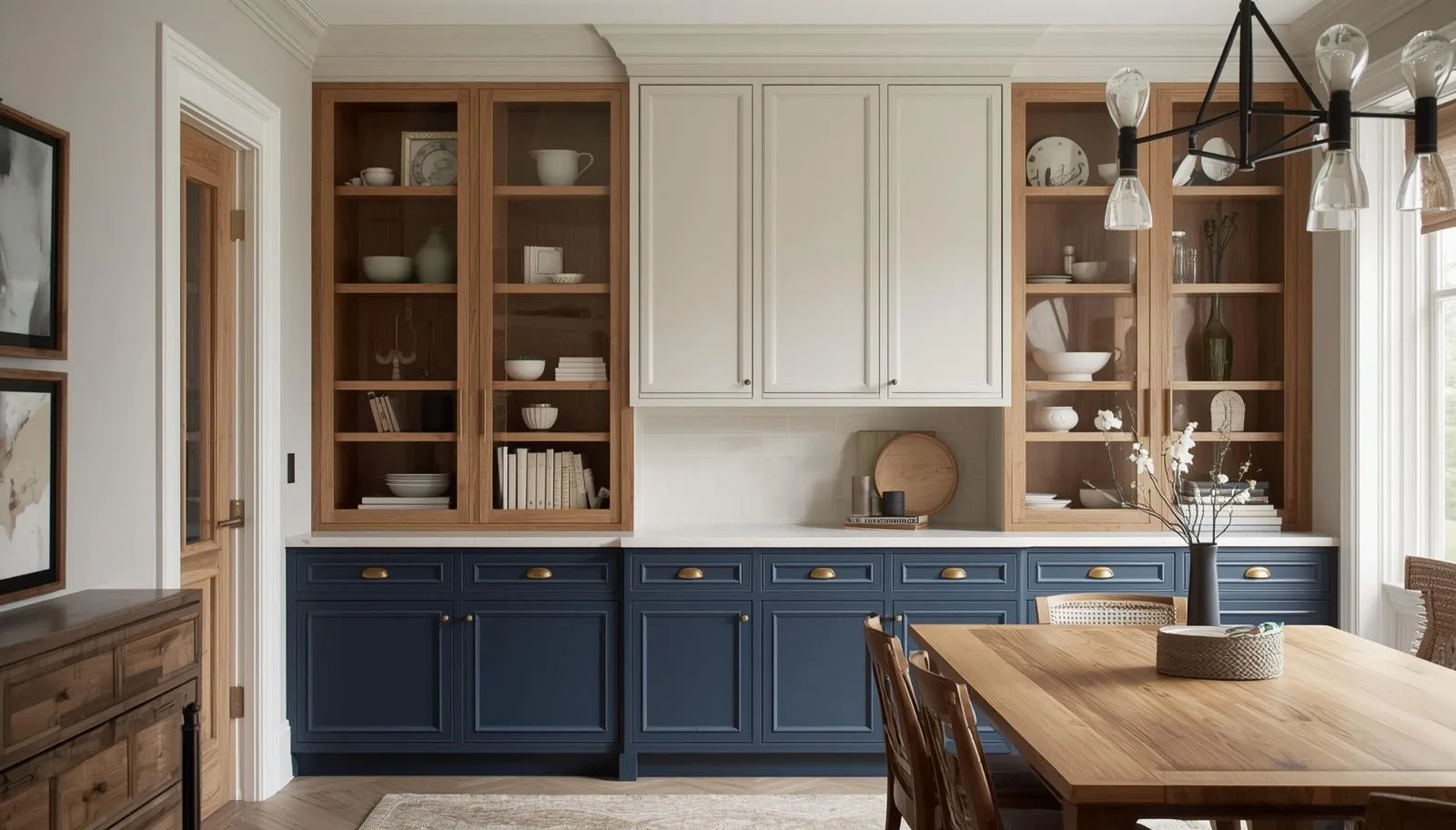
Contrast With Purpose, Not Decoration
Two-tone design is no longer about visual novelty. In modern millwork, contrast is used to define structure separating zones, emphasizing volume, and guiding visual hierarchy.
The most successful executions feel subtle rather than dramatic, with tones chosen to support the architecture rather than dominate it.
Controlled Material Pairing
Timeless two tone cabinetry depends on restraint.
Rather than introducing multiple finishes, high end design typically limits contrast to two primary material directions. This ensures cohesion across the space while still allowing visual variation.
When overused, contrast loses clarity. When controlled, it becomes architectural.
Function Embedded in the Finish Strategy
The strongest applications of this trend use contrast to support function.
Lighter tones often define upper volumes to maintain openness, while darker bases ground the space and conceal high use storage areas.
This creates a natural separation between visual lightness and functional durability.