


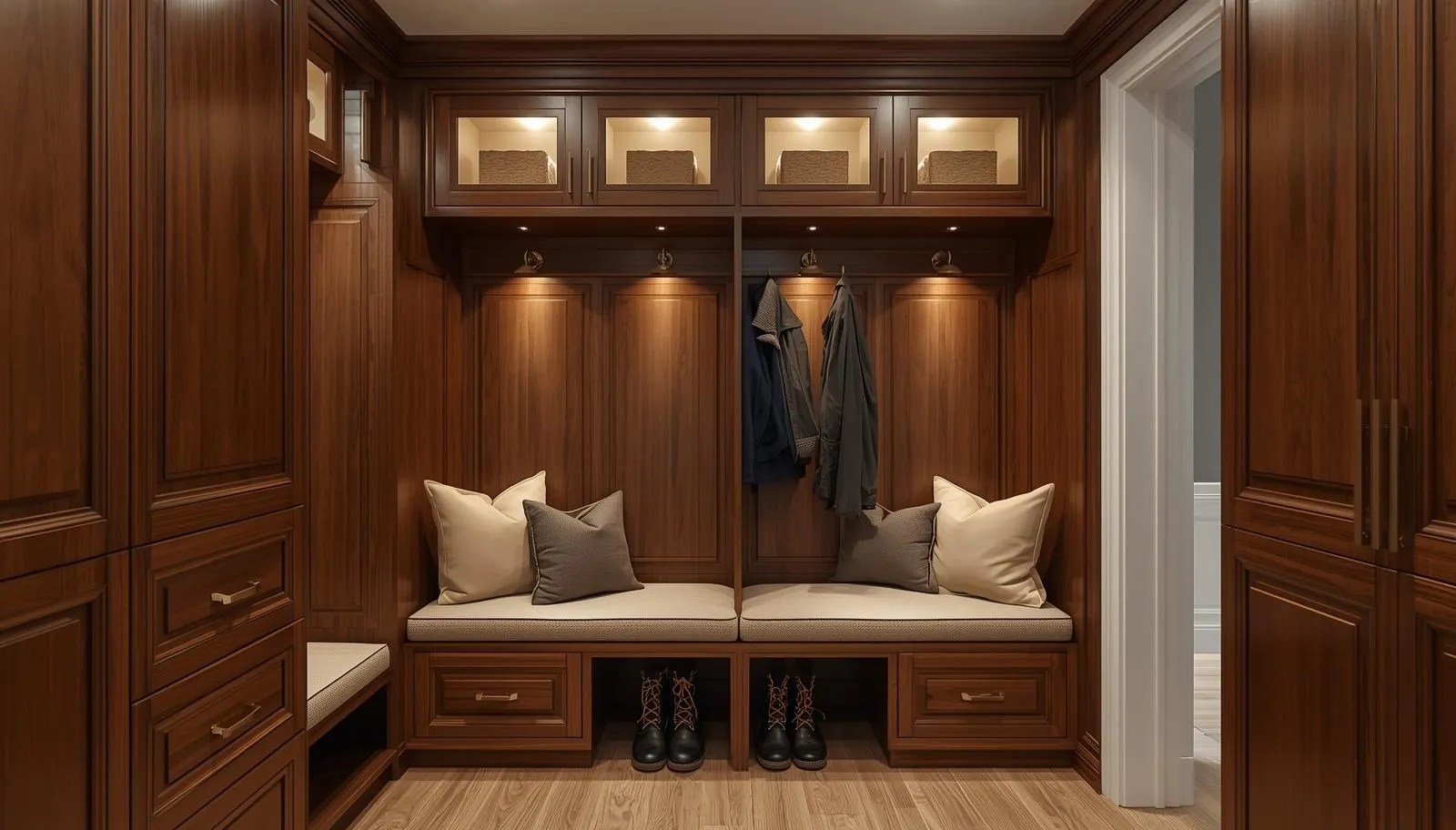
The Entry System Most Homes Underestimate
In cold climates, the entryway is the first functional failure point in a home. Snow boots, wet jackets, backpacks, and seasonal gear all need to be absorbed instantly not carried further inside.
A well designed mudroom is not about adding storage. It’s about creating a system that intercepts mess before it spreads.
At Blue Ribbon Millwork, this space is treated as a transition zone between exterior conditions and interior living not just a hallway with cabinets.
A Drop Zone That Removes Decision Fatigue
The most effective mudrooms eliminate hesitation. When someone walks in, there should be no question about where things go.
That’s where a properly designed drop zone becomes essential:
hooks placed at natural hand height, a landing surface for daily items, and a bench that supports quick changes in and out of footwear.
When these elements are intentional, clutter stops migrating deeper into the home. The system works because it requires no extra effort to maintain.
Closed Storage That Protects Visual Order
Open storage works in theory. In real life, especially during winter, it quickly becomes visual noise.
Closed cabinetry keeps the space controlled even on the busiest days. It hides seasonal overload boots, gloves, sports gear while maintaining a finished, architectural look.
This is where millwork matters: the difference between “storage furniture” and a space that feels integrated into the home.
Designing for Wet Zones, Not Just Storage
Boot areas in Edmonton are not dry storage they are wet zones.
Snow melt, salt residue, and moisture accumulation require a different level of planning. Materials, ventilation, and layout all play a role in how well the space performs over time.
A properly designed mudroom anticipates this:
durable surfaces that resist damage, spacing that allows airflow, and layouts that prevent water from pooling or spreading.
It’s not just about cleaning it’s about controlling conditions before they become a problem.