


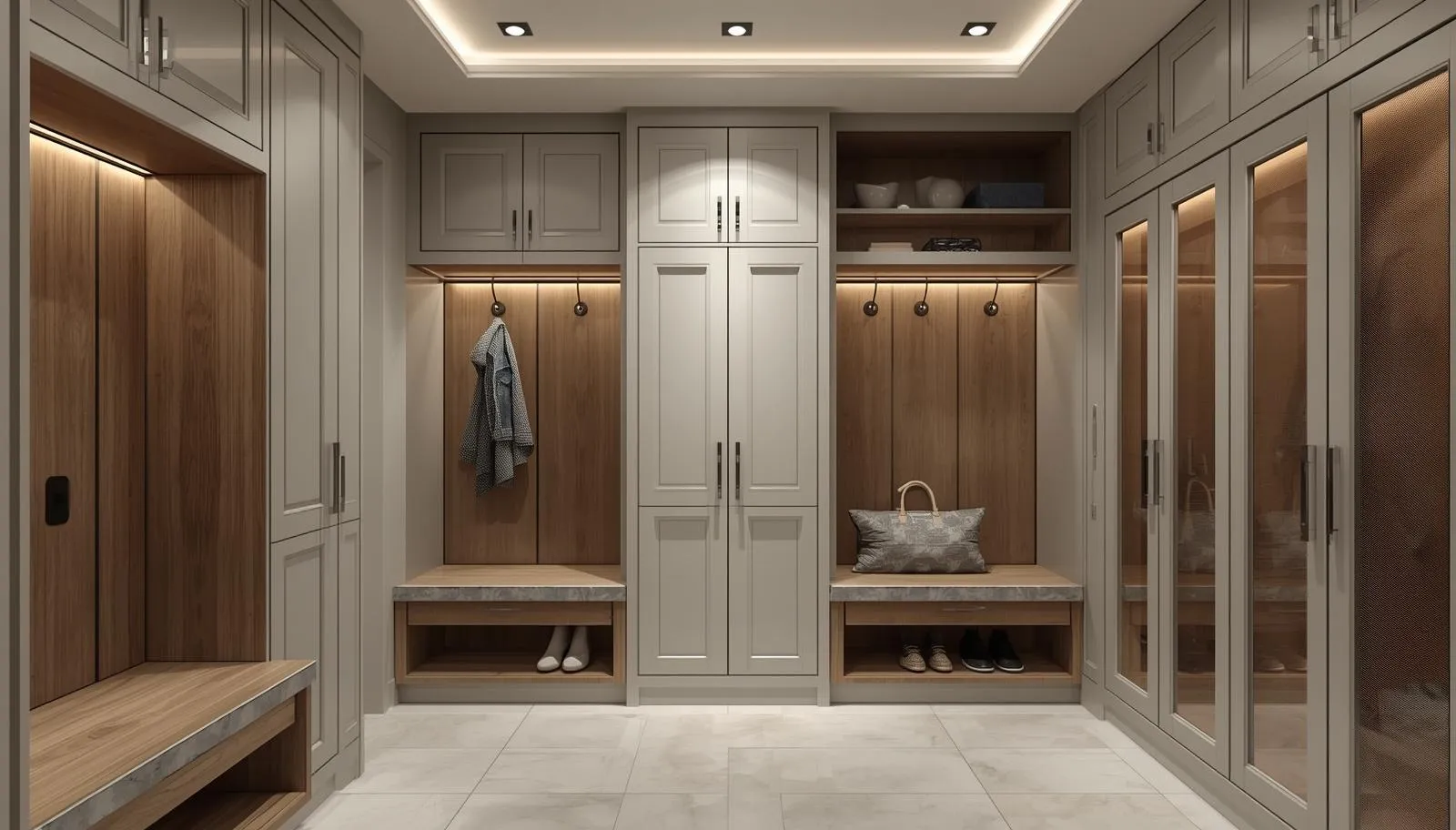
The Entryway Is a System, Not a Storage Wall
In many homes, the entryway is treated as a place to “add cabinets.” In reality, it is a high traffic control point that determines how the rest of the home performs.
This space must absorb weather exposure, daily movement, and constant drop-off behavior without allowing that chaos to spread further inside.
Custom millwork makes this possible by turning the entry into a structured system rather than a collection of disconnected storage pieces.
Storage That Follows Real Hierarchy, Not Visual Symmetry
Effective mudroom design starts with eliminating guesswork.
Daily essentials coats, shoes, bags need immediate, predictable access points. Mid-use items such as school gear, work accessories, and seasonal rotation pieces require secondary zones. Long-term or seasonal storage should remain fully contained and out of daily circulation.
When this hierarchy is not clearly defined, clutter becomes structural rather than accidental. The space begins to fail not because of lack of storage, but because of lack of logic.
Designing Entry Spaces as Controlled Zones
High-function entry systems operate as layered transitions, not single-purpose cabinetry.
A well designed mudroom typically separates three behavioral zones:
The exterior zone handles wet, dirty, and high impact items. The transition zone manages daily use belongings. The interior zone maintains clean, concealed storage that supports the rest of the home.
This structure is especially important in climates where snow, salt, and moisture are part of everyday life. Without separation, these elements inevitably migrate deeper into the home.
Lighting That Supports Use and Reinforces Order
Lighting in entry cabinetry is not decorative it is functional infrastructure.
Integrated lighting inside cubbies, lockers, and upper cabinets improves visibility during peak usage times such as early mornings and evenings. Subtle under bench or toe kick lighting helps define structure and prevents the space from feeling visually heavy.
More importantly, well lit storage naturally encourages better organization. Visibility reinforces order.
Materials That Withstand Impact, Not Just Appearance
Entry spaces are impact zones. They experience friction, moisture, temperature changes, and constant physical interaction. Material selection must reflect that reality.
Durable laminates, moisture-resistant substrates, and reinforced edge detailing are not optional in these environments they are foundational to long term performance. Surfaces must be selected based on how they will age under use, not just how they look at installation. In high function mudrooms, durability is part of the design language.
Storage That Adapts to Real Behavior
No household maintains perfect organization in entry spaces. That is why rigid storage systems fail over time.
Effective built ins are designed to adapt:
adjustable shelving for seasonal change, oversized compartments for unpredictable items like sports gear, and concealed zones that absorb daily “drop-off” clutter. The system should respond to behavior, not attempt to control it.
Visual Restraint Creates Long-Term Order
The most refined mudroom designs are not the ones with the most storage they are the ones with the least visual noise.
Consistent vertical alignment, controlled spacing, and reduced open storage contribute to a calmer environment, even during active use.
Open cubbies must be used intentionally. Too many exposed zones create instant visual fragmentation. In higher end design, restraint is what creates a sense of permanence and quality.
Final Thought
A mudroom is not an accessory space it is the control layer of the entire home.
When designed properly, it reduces daily friction, contains environmental impact, and establishes order before you even enter the main living space.
Custom cabinetry is what makes this level of control possible because it is built around behavior, not assumptions.