


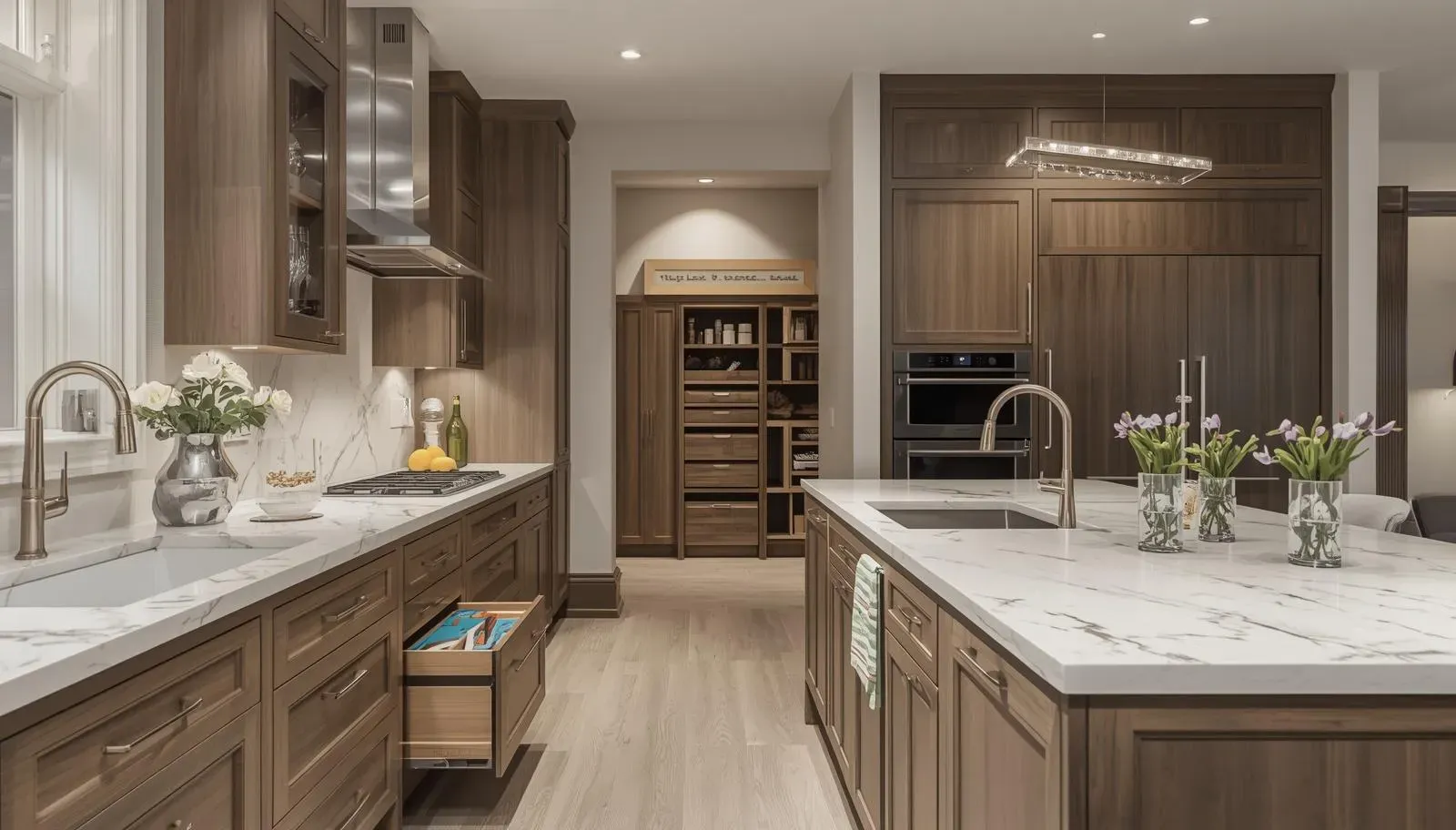
Most Kitchens Don’t Lack Storage They Lack Strategy
The most common issue in kitchen design isn’t insufficient cabinetry. It’s misaligned placement.
Storage is often distributed evenly for visual balance instead of functional efficiency. As a result, everyday items end up in inconvenient locations, and workflow becomes fragmented.
Custom millwork changes this by shifting the focus from volume to intention placing storage exactly where action happens.
Designing Kitchens Around Functional Zones
High performance kitchens are not designed as a collection of cabinets. They are structured around activity zones.
Each zone supports a specific part of the workflow:
Prep zones concentrate tools, cutting surfaces, and waste management
Cooking zones keep spices, utensils, and oils within immediate reach
Cleaning zones integrate concealed storage and dishwasher adjacency
This approach removes unnecessary movement and reduces countertop clutter without relying on constant organization.
When Drawers Outperform Upper Cabinets
In many modern kitchen layouts, traditional upper cabinetry is no longer the most efficient use of space.
Wide, deep drawers in base cabinets improve both usability and visual clarity by:
providing full top down visibility
eliminating overhead reach and strain
creating uninterrupted, clean wall surfaces
This shift also contributes to a more architectural aesthetic, where the kitchen feels lighter and more intentional.
Lighting as Part of the Millwork System
Integrated lighting is no longer a finishing detail it is part of the design structure.
When properly planned, it enhances:
visibility inside drawers and storage zones
texture and depth of materials
overall spatial layering and atmosphere
The key is integration. Lighting should feel embedded within the cabinetry, not added after the fact.
Hidden Storage That Controls Visual Complexity
Clutter in kitchens is rarely a lack of space it is a lack of concealment strategy.
High function kitchens rely on integrated storage systems such as:
concealed appliance garages
hidden coffee or beverage stations
full height pantry systems with seamless paneling
These elements allow the kitchen to shift between active use and visual calm instantly, without effort.
Material Decisions That Support Real Use
Material selection should respond to how the kitchen is used, not just how it looks in isolation.
Durability, maintenance, and interaction patterns matter as much as aesthetics. Surfaces that perform well under daily use maintain their appearance longer and reduce long term upkeep.
In high end millwork, materials are chosen not only for style, but for how they behave in real conditions over time.
Why This Changes How a Kitchen Feels
A kitchen that only looks well designed often becomes frustrating in daily use.
A kitchen that is engineered around function:
reduces unnecessary movement
keeps surfaces visually controlled with less effort
improves long term usability and maintenance
This is the difference between cabinetry that occupies space and cabinetry that actively supports how you live.