


Dining Spaces Work Best When Storage Feels Intentional, Not Added
A dining room is often treated as a transitional space furnished, but not fully designed.
Built ins change that dynamic by introducing structure. They provide a place for dining essentials, serving ware, and seasonal items while maintaining a clean visual presence when the space is not in use.
The goal is not to fill the room with cabinetry, but to give it purpose beyond the table itself.
Storage Should Follow Frequency, Not Equal Distribution
Effective buffet wall design is based on access logic. Items used daily or weekly should always be positioned within immediate reach. Occasional use pieces, such as serving platters or seasonal décor, belong in less accessible zones.
Long term storage should be fully concealed to maintain visual clarity. When storage is distributed based on frequency of use, the system stays functional without constant reorganization.
Lighting That Defines the Architecture of the Wall
Lighting in dining room cabinetry is not decorative it is spatial definition.
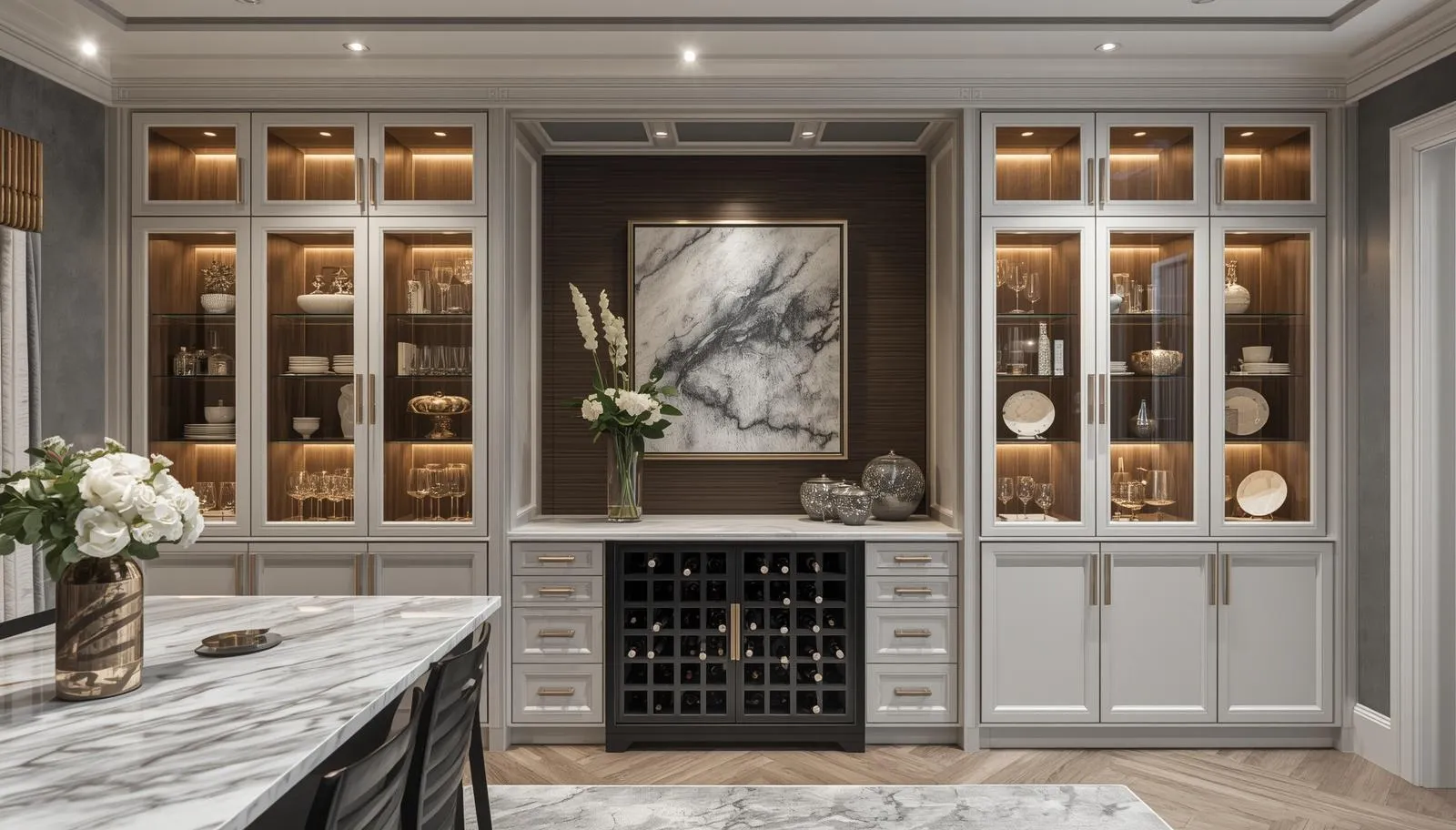
Integrated lighting under shelving or within display niches creates depth and highlights material quality. It also enhances usability when accessing stored items in lower-light conditions during entertaining.
When properly integrated, lighting becomes part of the architectural composition, reinforcing structure rather than adding visual noise.
Materials Should Reflect Both Function and Atmosphere
Dining rooms sit between daily living and formal entertaining, which makes material selection especially important.
Surfaces need to balance durability with visual refinement. Painted finishes offer a clean architectural backdrop, while wood tones introduce warmth and depth. Mixed material approaches can help differentiate storage zones from display areas.
Consistency across the built in ensures the wall reads as one intentional element, not a collection of separate pieces.
Built-Ins That Support Entertaining, Not Just Storage
A well designed buffet wall is not just about organization it is about experience.
It allows the dining room to shift seamlessly between everyday use and entertaining by providing hidden storage for tableware, serving items, and hosting essentials. When designed properly, everything needed for a gathering is accessible without cluttering the space visually.
This is where millwork becomes functional hospitality infrastructure.
Proportion and Integration Define Quality
Dining room built ins often fail when they are treated as standalone furniture pieces.
Shelf spacing, cabinet depth, and alignment with architectural elements such as windows, ceilings, and adjacent rooms all influence how integrated the wall feels.
Custom millwork ensures these elements are resolved within the architecture, not forced into it after construction.
From Storage Wall to Architectural Feature
When designed properly, dining room built-ins stop reading as storage and become part of the room’s architecture.
They define the wall, reinforce the dining experience, and create continuity between spaces in the home. The result is not just more storage it is a more intentional environment.