


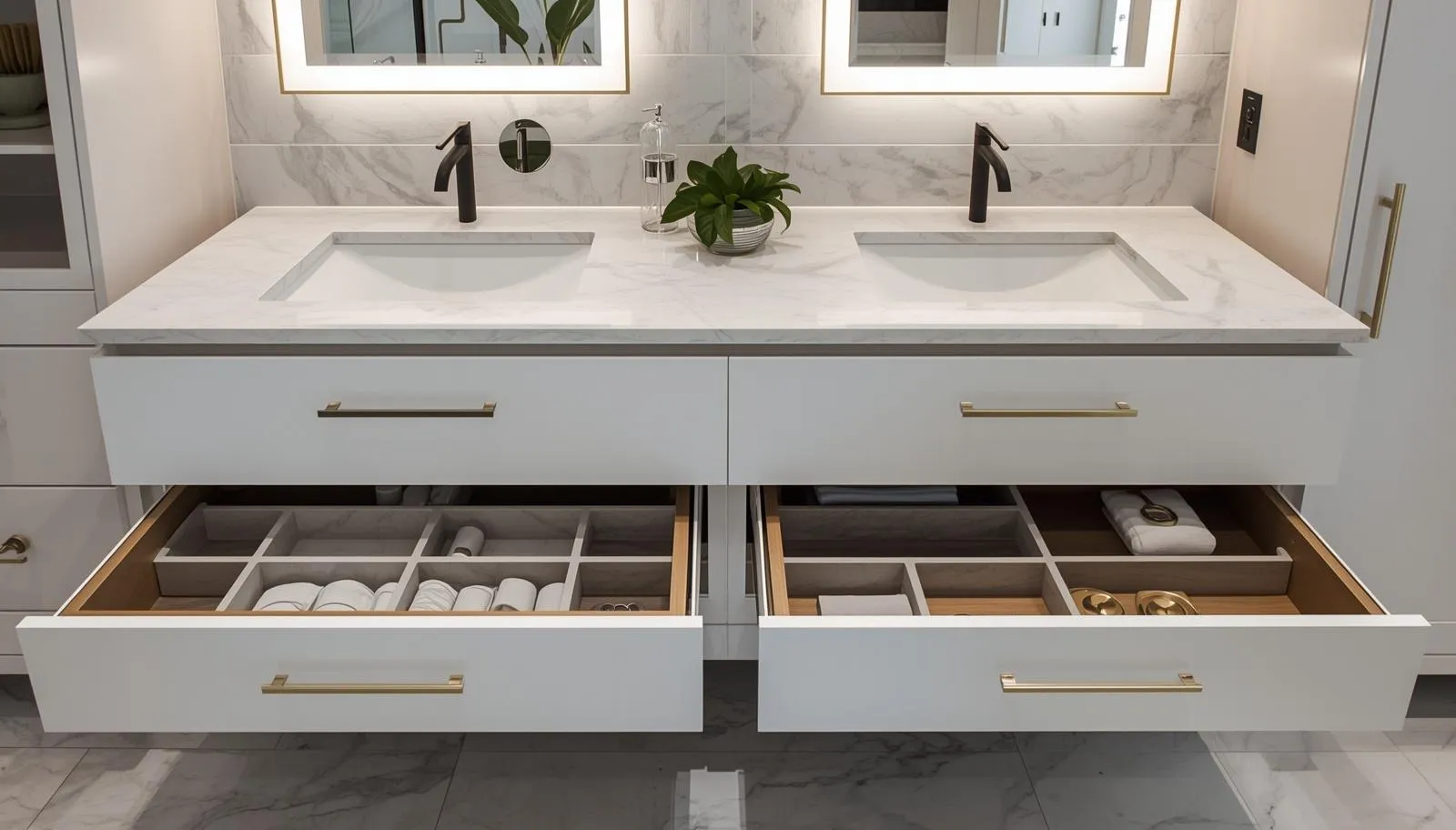
Designing Bathrooms Around How They Are Actually Used
A bathroom vanity is not a standalone cabinet. It is a daily interaction point that influences how the entire space feels and functions.
Strong design starts by understanding usage patterns: morning routines, shared storage needs, and the constant balance between visibility and concealment.
When cabinetry is planned around these realities, the result is a space that feels calm, controlled, and intuitive rather than reactive or cluttered.
Storage That Follows a Clear Internal Logic
One of the most effective ways to improve bathroom function is through structured storage hierarchy.
Instead of treating all storage equally, the vanity should separate items based on frequency of use:
Daily essentials belong in the most accessible drawers or upper compartments, while backup products and bulk items are better suited to deeper or lower storage zones. Less frequently used items can be placed in higher or concealed areas.
This structure reduces decision fatigue and eliminates unnecessary searching, especially in shared bathrooms where multiple users interact with the same system.
Lighting as an Architectural Layer, Not an Afterthought
Lighting plays a defining role in both usability and atmosphere.
Integrated lighting under floating vanities introduces a subtle architectural effect while improving visibility at night. Interior drawer lighting enhances functionality by making stored items easier to locate without relying on overhead fixtures.
In larger bathroom suites, layered lighting strategies combining ambient, task, and accent lighting add depth and create a more refined, spa like environment.
When properly integrated, lighting becomes part of the cabinetry design rather than something applied to it.
Materials That Perform in Real Conditions
Bathroom cabinetry exists in a demanding environment where moisture, temperature changes, and daily use all impact performance.
Material selection should reflect that reality.
Engineered wood products with high-quality laminates, sealed veneers, and moisture-resistant finishes offer long term durability without compromising design intent. Matte surfaces are often preferred for their ability to reduce the visibility of fingerprints and water marks over time.
The goal is not only aesthetic alignment with the home, but long term performance under daily use.
Proportion Is More Important Than Size
Effective vanity design is not about maximizing size it is about respecting proportion.
In smaller bathrooms, wall-mounted vanities help open visual space and improve floor clarity. In larger suites, extended double vanities or continuous countertop runs help anchor the room and maintain architectural balance.
When proportion is considered correctly, the space feels intentional regardless of scale.
Hardware as a Controlled Design Element
Hardware is a tactile and visual interface between the user and the cabinetry.
Minimal recessed pulls, integrated profiles, or carefully selected handles can significantly shift the tone of a vanity. Consistency across faucets, lighting fixtures, and cabinetry hardware reinforces cohesion throughout the space.
In higher end applications, reducing visual hardware often results in a cleaner, more architectural expression.
Increasing Storage Without Increasing Visual Weight
The most successful bathroom cabinetry solutions expand storage capacity without making the space feel heavier or more complex.
This is achieved through:
deep drawer systems instead of open shelving
concealed compartments for electrical tools and accessories
full height integration that aligns with wall architecture
Vertical efficiency becomes especially important in compact bathrooms where floor space is limited.
Custom millwork allows these elements to be embedded directly into the architecture, rather than added as separate components.
Final Thought
A well designed bathroom vanity is defined by intention, not scale. When storage, lighting, proportion, materials, and hardware work together, the result is a space that feels calm, functional, and refined in everyday use.
Custom cabinetry makes this level of precision possible turning routine interaction into a more seamless and controlled experience.