


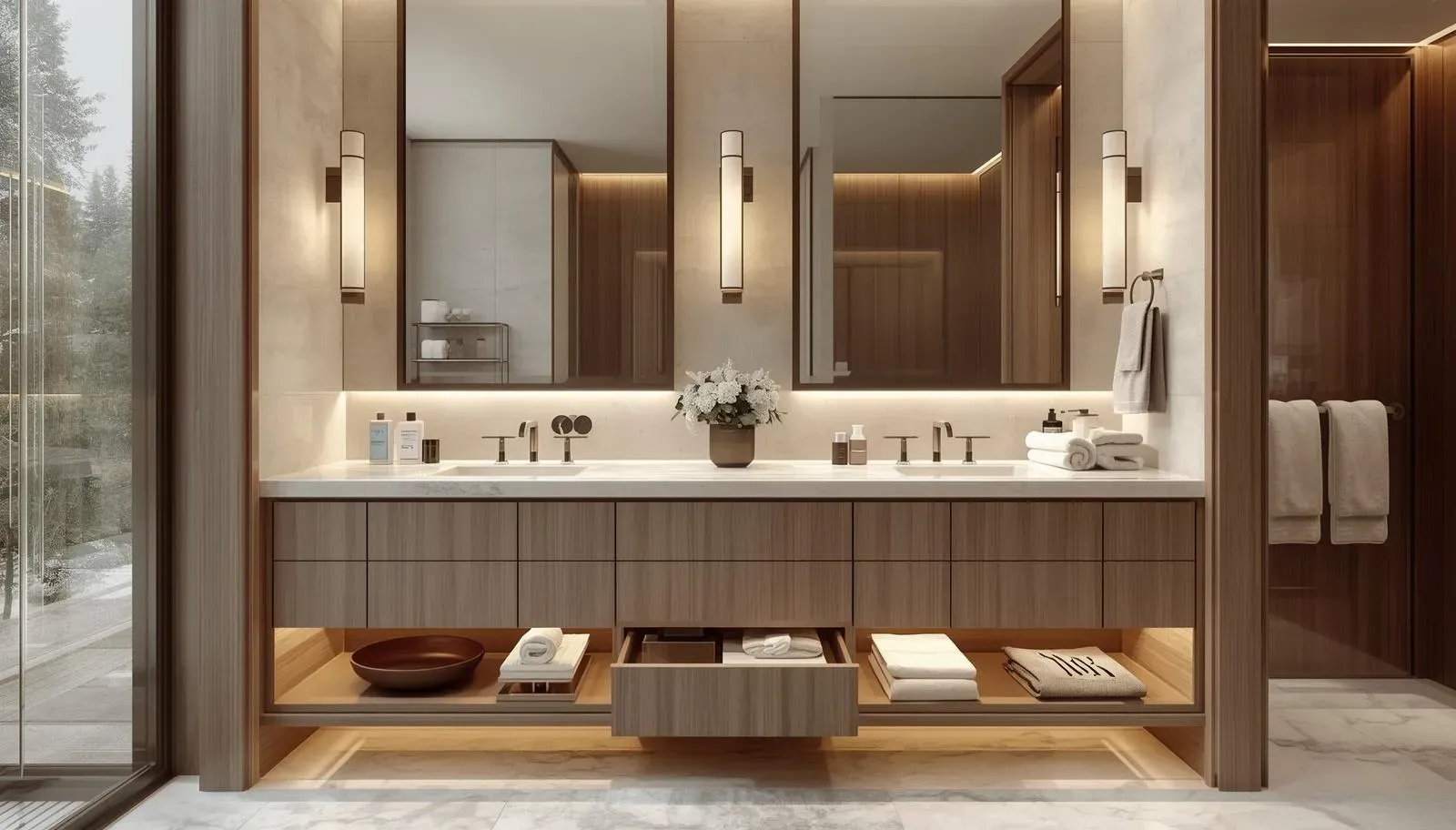
Bathroom cabinetry is used more frequently than almost any other built in element in a home. Because of that, it must be designed around repetition, moisture, and speed of use not just appearance.
A successful vanity balances three things:
practical storage for everyday essentials
efficient access during rushed routines
durability in a high moisture environment
When these are ignored, the result is usually cluttered counters, wasted storage space, and long term frustration.
1. Prioritize Drawer Based Storage Wherever Possible
Drawers are one of the most effective storage solutions in bathroom design.
Unlike fixed shelving, they allow full visibility and controlled organization of daily items such as toiletries, skincare, and grooming tools.
Benefits of drawer focused design:
eliminates hidden clutter
improves accessibility in tight spaces
maximizes vertical storage efficiency
In smaller bathrooms especially, drawer systems create a cleaner and more open feel by reducing countertop dependency.
2. Design Around Plumbing Constraints Early
One of the most overlooked factors in vanity planning is plumbing placement.
Drain lines, supply lines, and rough-in locations directly influence:
usable drawer depth
sink positioning
cabinet configuration
If plumbing is not considered at the design stage, storage capacity is often sacrificed after the fact.
For best results, cabinet layout should be designed in coordination with plumbing reality not adjusted around it later.
3. Choose Finishes That Handle Daily Moisture
Bathrooms are high moisture environments, and surfaces are constantly exposed to water, steam, and product buildup.
For long term performance, cabinetry should prioritize:
moisture resistant materials
smooth, easy to clean surfaces
minimal detailing that traps residue
Simple, durable profiles maintain their appearance longer and reduce daily maintenance effort.